OMA’s Edo Museum Renovation
/ Introduction /
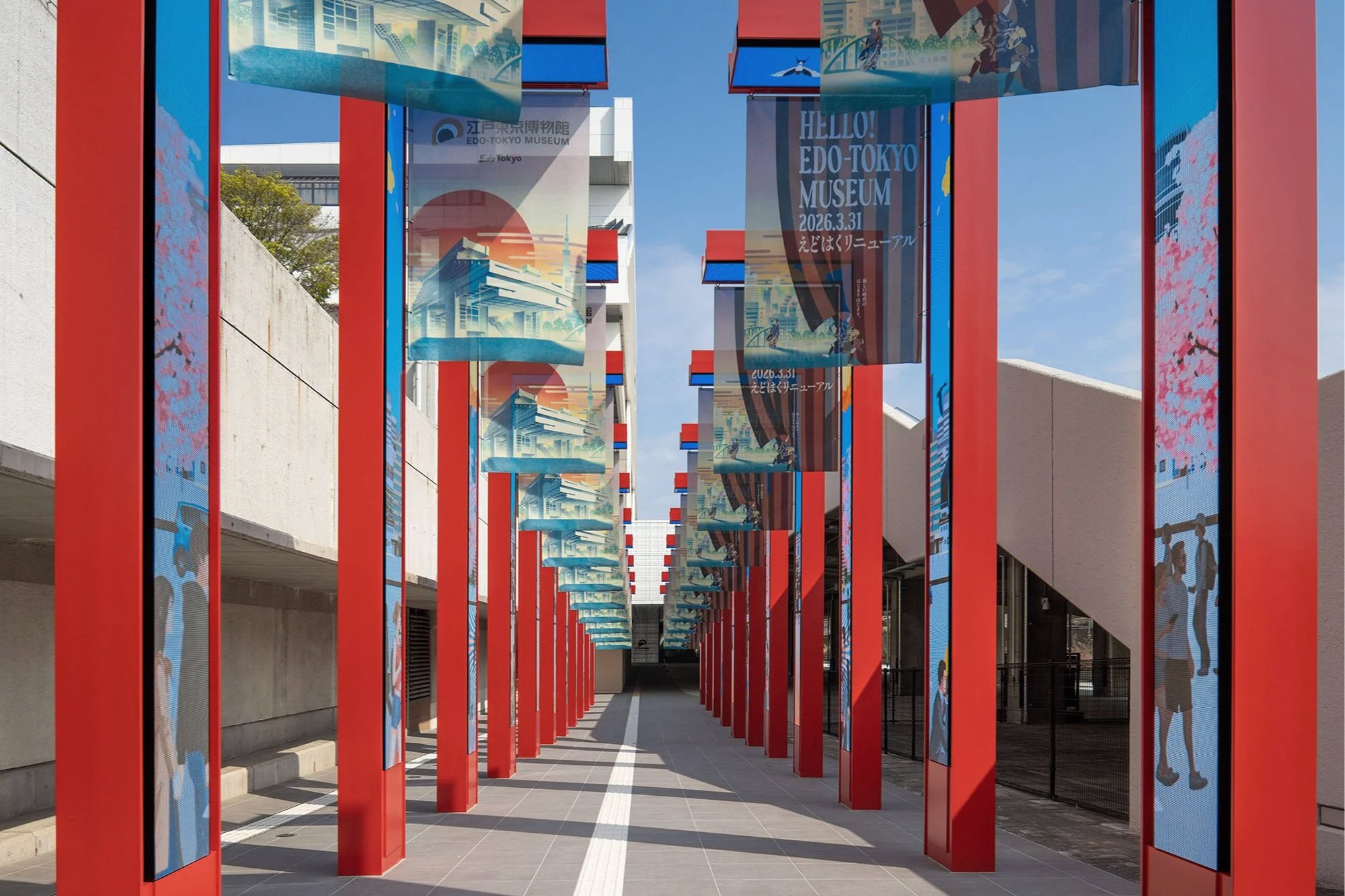
A few days before the opening event, I was contacted by OMA New York to document the completion of the renovation of the Tokyo Edo Museum in Tokyo. The assignment included both architectural photography and video production, covering the project itself as well as the official opening event.
The objective was twofold: to create a visual record of the completed architecture before public access and to capture the opening ceremony attended by project stakeholders, architects, and public officials, including the Governor of Tokyo. Given the limited timeframe and the communication requirements surrounding the launch, the project required careful preparation and a fast production schedule.
As a video director and architectural photographer, I was responsible for documenting the architecture while overseeing the overall visual coverage of the event throughout the day.
/ Shooting Day /
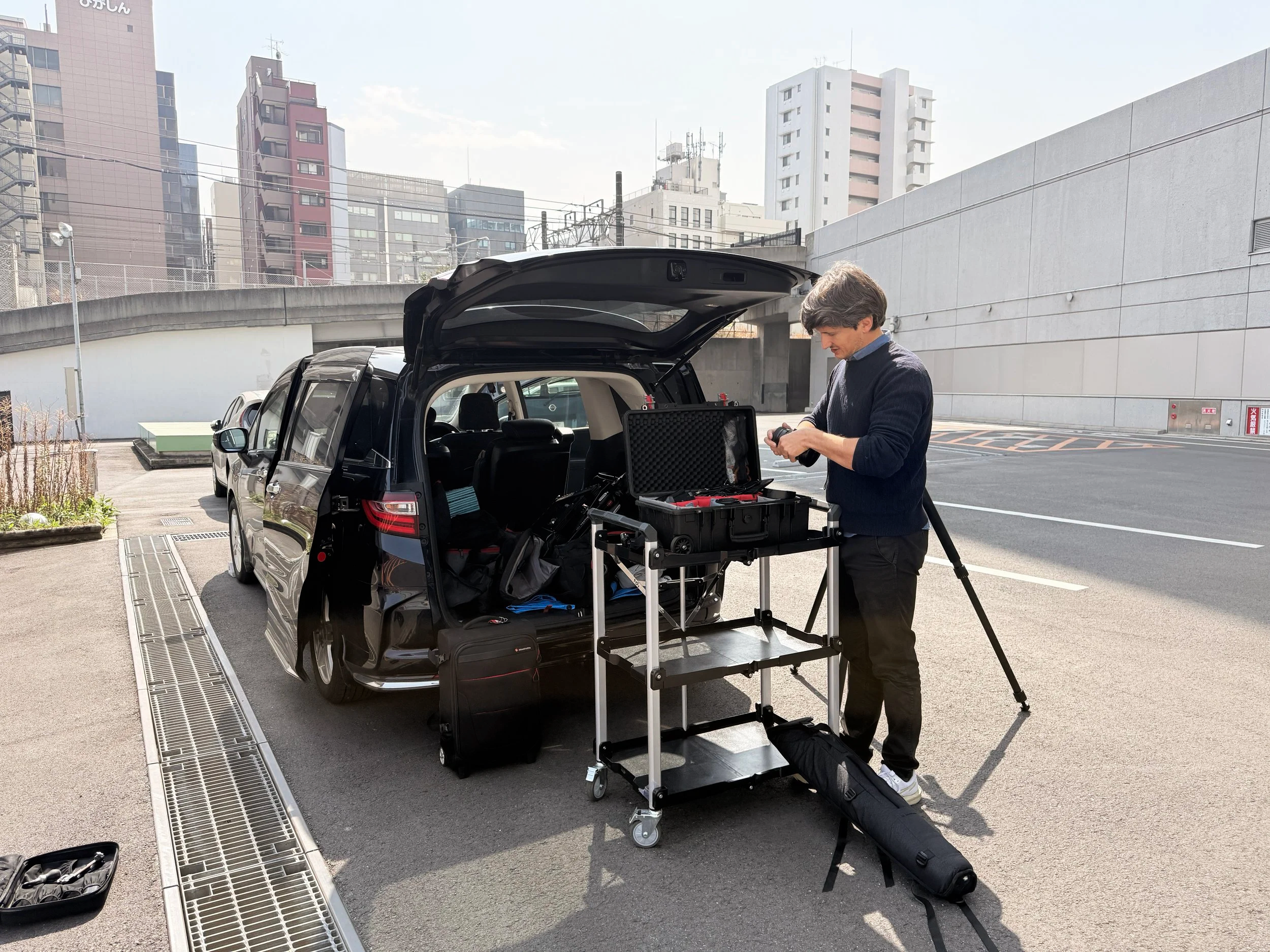
The production was carried out with a three-person team. My primary assistant focused on video production, capturing stabilized exterior and interior footage throughout the building, while a production assistant managed equipment logistics and helped coordinate movements between locations.
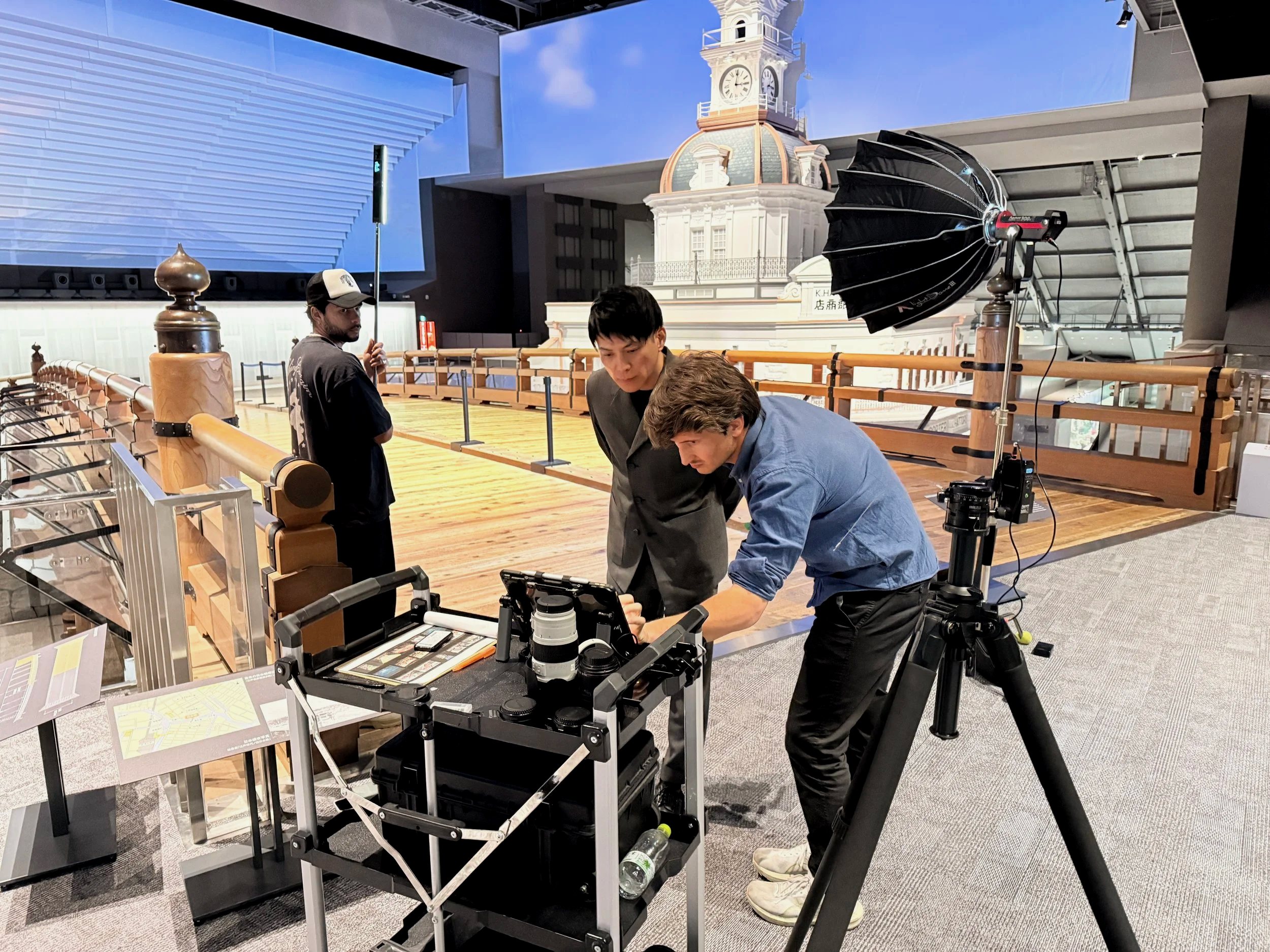
During the first part of the day, I focused on architectural photography, documenting the newly renovated spaces before the arrival of guests and visitors. As the day progressed, my role shifted toward directing the video production. While my assistant concentrated on capturing stabilized footage throughout the building, I coordinated camera movements, supervised shot selection, and ensured that every key sequence was covered. This dual role allowed me to maintain a consistent visual direction across both photography and film production.
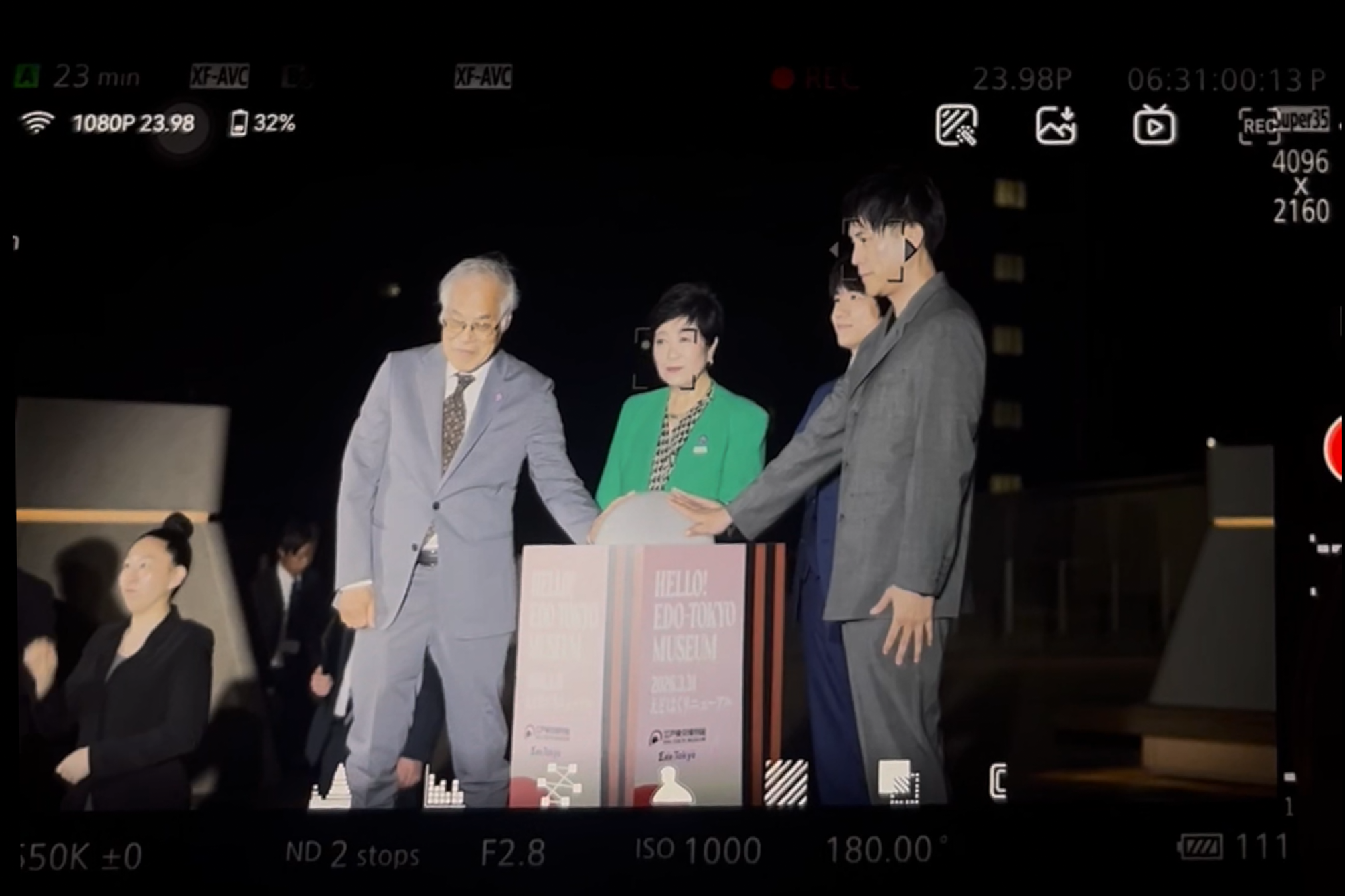
The opening event brought together OMA Partner Shohei Shigematsu, members of the project team, media representatives, and government officials, including the Governor of Tokyo. Working before the building opened to the public allowed us to photograph and film the architecture in ideal conditions while also documenting the atmosphere surrounding the inauguration.
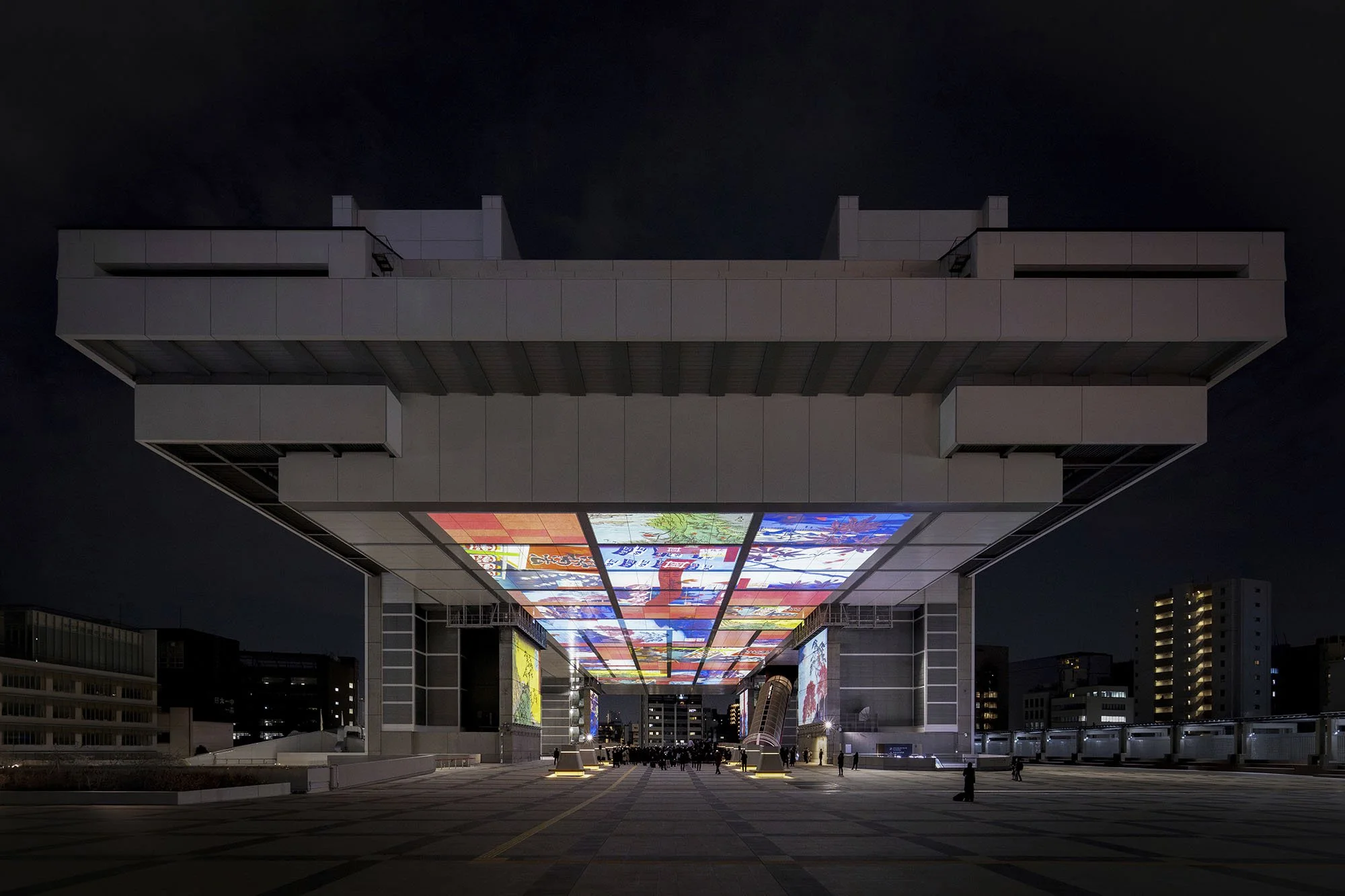
The most memorable aspect of the project was undoubtedly the large-scale projection mapping installation presented after sunset. The museum’s distinctive elevated structure, often compared to a giant animal standing on four legs, creates a vast public space beneath the main volume. This monumental white ceiling became the canvas for an immersive visual experience combining contemporary projection technology with references to Japanese history and culture. Animated sequences inspired by sumo wrestling, Hokusai’s imagery, seasonal landscapes, and traditional mythology transformed the underside of the building into a dynamic public spectacle. Capturing these projections required a different visual approach and added an entirely new dimension to the architectural documentation.
/ Post-Production /
Because the project was tied directly to a public opening event, turnaround times were particularly short. The client required images almost immediately for distribution to magazines, websites, and communication channels.
A first selection of photographs was delivered the following day, allowing the communications team to begin their press outreach. The complete photographic delivery followed two days later.
For the video production, we agreed on two deliverables: a primary film of approximately one minute and thirty seconds intended for project communication, and a shorter social media version optimized for platforms such as Instagram. The editing process focused on creating concise and engaging content while maintaining the architectural narrative of the project.
/ Feedback & Reflections /
One of the key takeaways from this project was the importance of rapid communication and decision-making. From the initial request to the final delivery, every stage of the production moved quickly, requiring efficient coordination between the client and the production team.
The project also reinforced the effectiveness of a compact three-person crew. By clearly dividing responsibilities between photography, video production, and logistics, we were able to move efficiently throughout the building and respond quickly to changing requirements during the event.
This structure allowed us to remain flexible while still delivering both photographic and video content at a professional level within a very demanding timeframe. The client was ultimately very satisfied with the final deliverables, confirming that this lightweight production approach was well suited to the project’s needs.
/ Conclusion /
This project was particularly meaningful because it marked my first collaboration with OMA and with Shohei Shigematsu, whose work I have followed for many years. While relatively compact in scale, the assignment provided an opportunity to contribute to an important cultural project in Tokyo and to document a significant moment in the museum’s reopening.
The combination of architectural photography, event coverage, and large-scale projection mapping created a unique production experience. Working closely with a small and efficient team allowed us to react quickly, cover a wide range of content, and deliver the final materials within a very short timeframe.
Most importantly, the client was pleased with both the photographic and video deliverables, making this first collaboration with OMA a particularly rewarding experience and one that I hope will lead to future opportunities.
Vincent H.
April 2026