3 Days of Filming for KPF
/ Introduction /
Earlier this year, I had the opportunity to collaborate with KPF (Kohn Pedersen Fox), one of the world’s leading architectural firms, on the production of two films for their YouTube channel in Japan.
The collaboration began when KPF’s team in New York reached out through my website. They were looking for someone based in Japan who could not only direct the filming process, but also understand the specific requirements of architectural projects and help coordinate production locally.
For KPF, having a local partner familiar with architecture proved particularly valuable. I was responsible for many aspects of the production process, including crew coordination, equipment rentals, transportation, hotel bookings, scheduling, site access, and communication with the various stakeholders involved in each project.
The films were developed for two different series on KPF’s YouTube channel. The first focused on One Fukuoka Building as part of the firm’s Behind the Design series, while the second explored Roppongi Hills through the perspective of a museum curator for KPF’s Perspective series.
As with most architectural productions, a significant amount of work happened long before the cameras were switched on. Multiple meetings with KPF’s New York team helped define the creative direction of each film, while local coordination involved building operators, museum staff, management teams, and various stakeholders who would ultimately play an important role in making the productions possible.
/ Shooting Days /
A.One Fukuoka Building
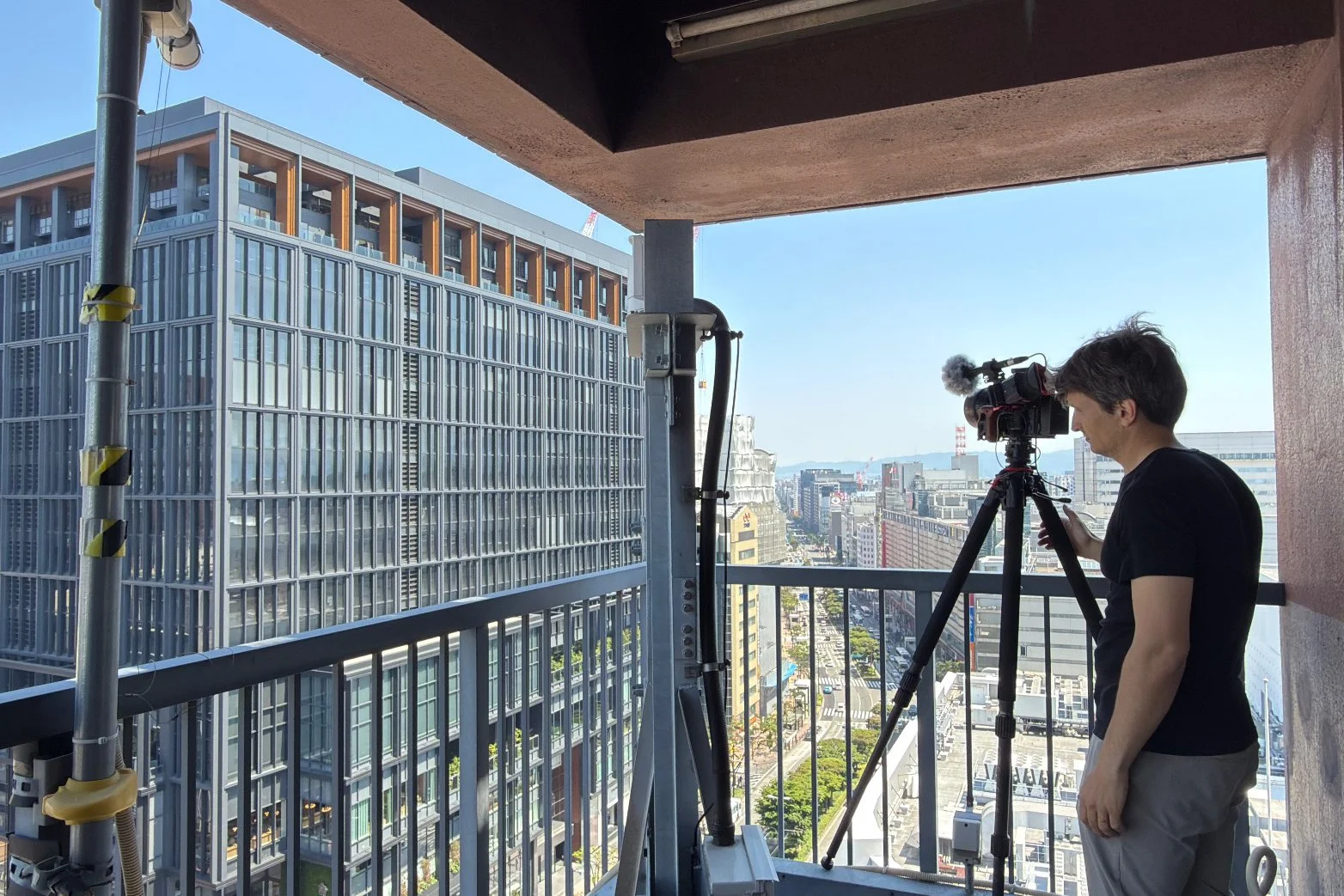
For the Fukuoka production, our team traveled the day before the shoot in order to capture several afternoon and night sequences while also familiarizing ourselves with the project and its surroundings.
One of the advantages of working in Japan is how accessible major cities remain from Tokyo. With a short domestic flight and a compact production setup, we were able to transport professional cinema equipment efficiently while maintaining a flexible schedule.
The main filming day started early in the morning. Certain locations were only accessible during limited time windows, making careful planning essential. Throughout the day, we documented the building from multiple perspectives, capturing both the architecture itself and its relationship with the surrounding city.
The beginning of Japan’s rainy season added an extra layer of complexity to the production. Weather forecasts were monitored closely in the days leading up to the shoot, and schedules occasionally needed to remain flexible. Fortunately, conditions ultimately allowed us to complete all planned sequences.
B.Roppongi Hills
The Roppongi Hills production followed a different approach.
Two weeks before the shoot, I conducted an audio interview with the curator who would become the central voice of the film. This initial conversation helped establish the narrative structure and identify the locations that would best support the story.
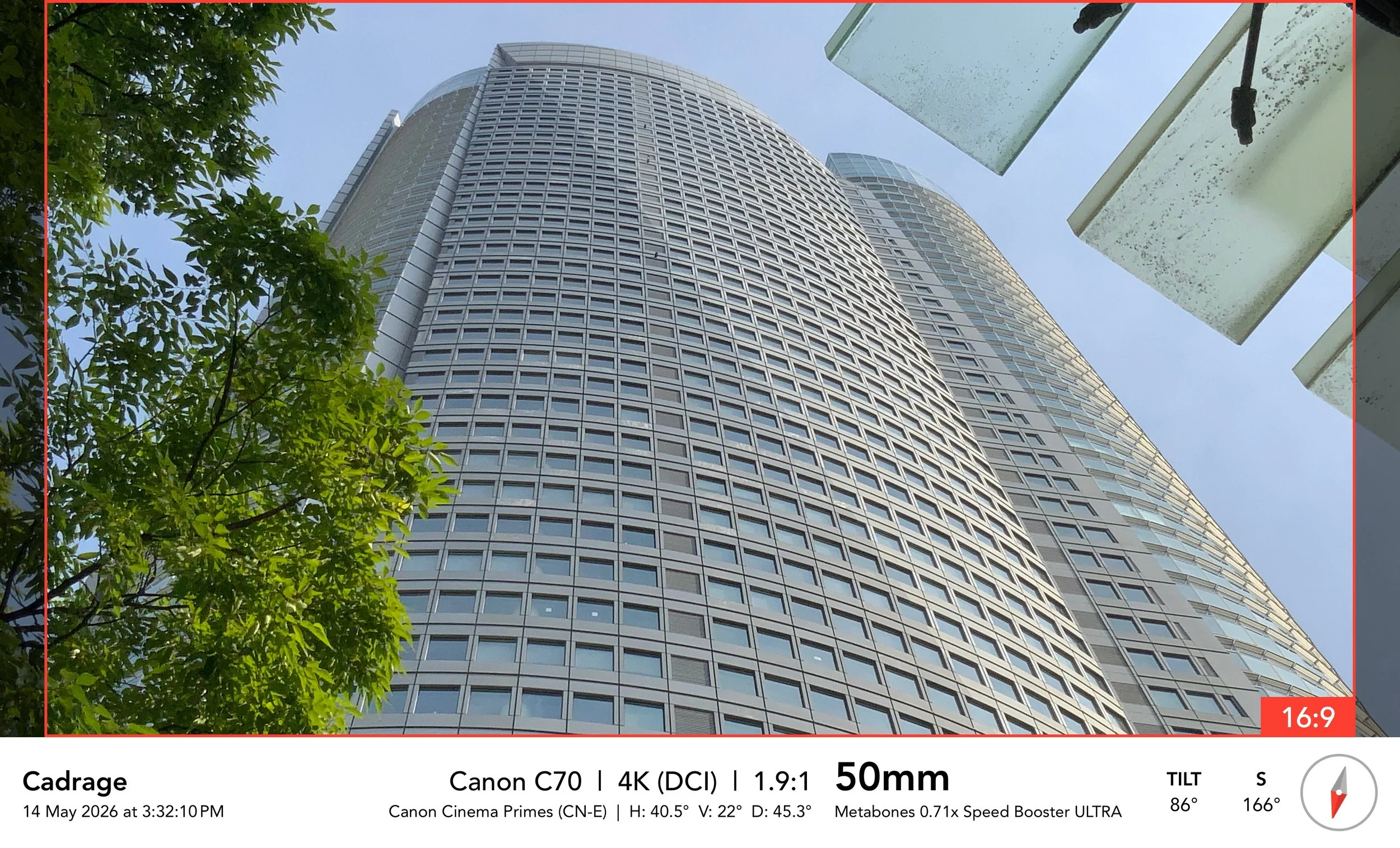
I also carried out a location scout before filming. Using a virtual lensing application on my iPad, I was able to pre-visualise framing options, evaluate camera positions, and study how natural light moved through the building throughout the day. For architectural filmmaking, understanding light is often just as important as understanding the architecture itself.
Filming began early in the morning and initially focused on the curator’s daily activities. We followed him through the museum, documenting interactions with colleagues, exhibition spaces, and moments that illustrated his relationship with the building.
The second half of the day shifted toward the architecture itself. Working around museum opening hours and visitor circulation required careful coordination, as we wanted to remain as discreet as possible while still capturing the footage required for the film. The shoot continued into the evening to document the atmosphere of Roppongi Hills after sunset.
/ Equipment & Workflow /
For both productions, we worked with a Canon C70 paired with Canon cinema lenses CN-E, a combination that offered the reliability, image quality, and flexibility required for fast-paced architectural productions.
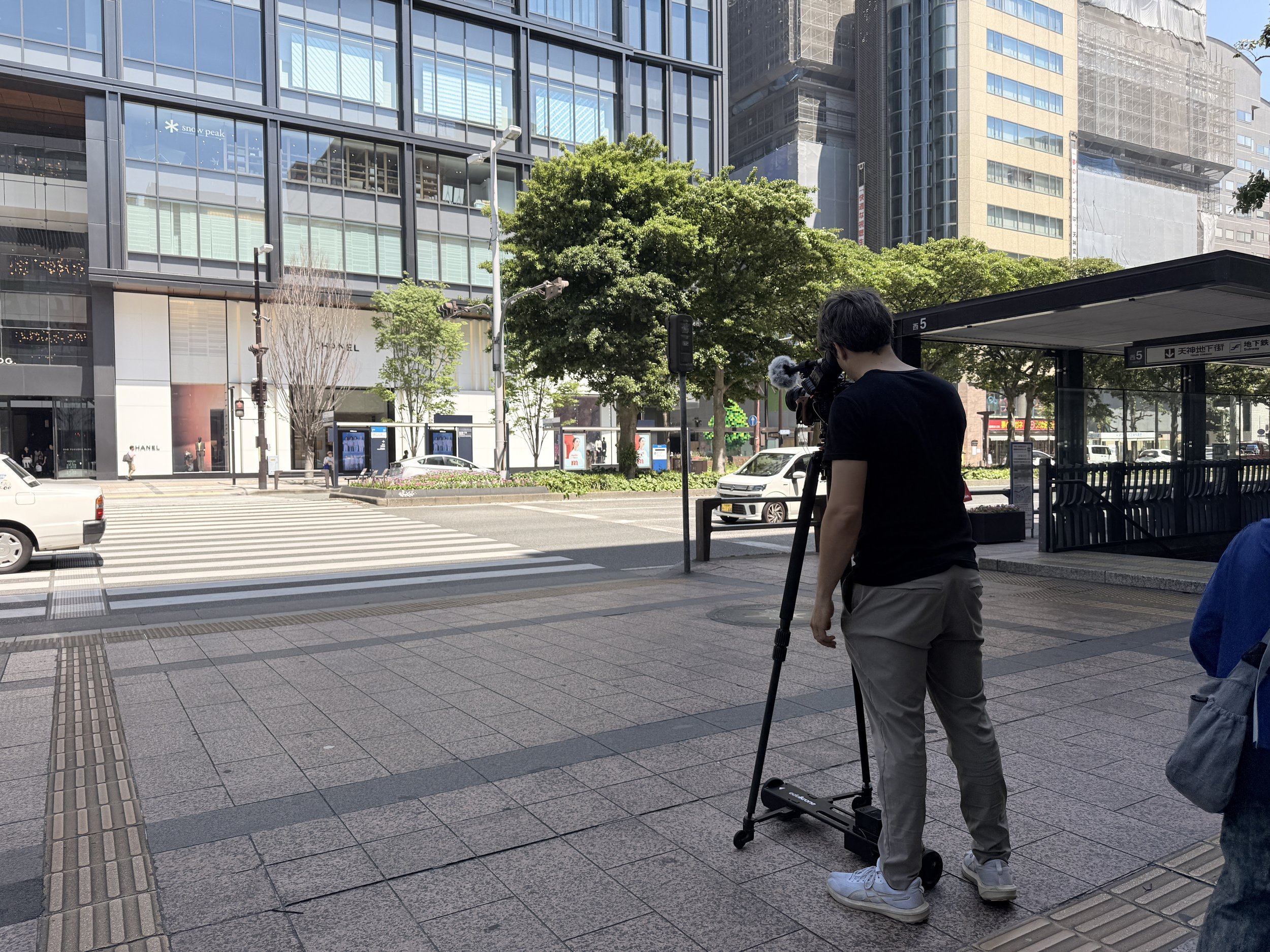
One of the most interesting additions to our workflow was the use of a motorized Edelkrone DollyPLUS system. Compared to traditional sliders, which are often limited to only a few centimeters of movement, this setup allowed us to create long and continuous camera moves through public spaces and architectural environments.
These subtle movements helped reveal the relationship between people and architecture while bringing a more cinematic quality to the final films. In busy locations such as Roppongi Hills, the ability to execute precise and repeatable camera movements proved particularly valuable.
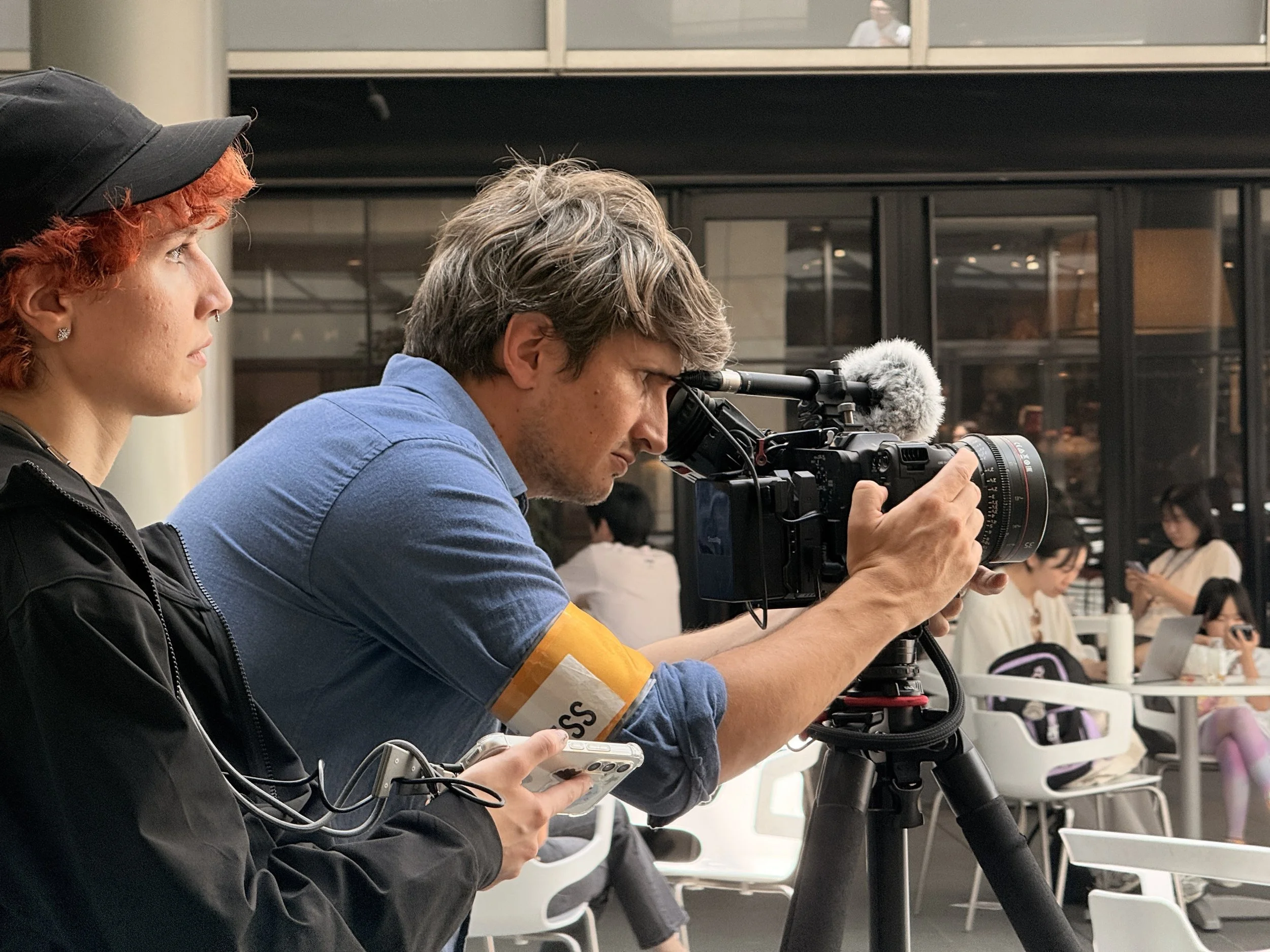
To streamline communication on set, we also used a Hollyland wireless video transmission system. This allowed the camera feed to be viewed in real time on multiple devices, including my iPad and the production team’s mobile devices. Being able to monitor framing, movement, and timing remotely made it easier to coordinate the crew while working in active public environments.
While technology plays an important role, architectural film making ultimately remains a balance between preparation, observation, and timing. Understanding how people move through a space, anticipating changes in light, and knowing when to wait for the right moment often have a greater impact on the final image than the equipment itself.
/ Collaboration & Feedback /
One aspect of this project that I particularly enjoyed was the collaborative process itself.
Unlike many of my previous productions, where I would typically oversee a project from filming through editing and final delivery, KPF’s internal team handled the post-production process. My role focused entirely on production, cinematography, and capturing the strongest possible material for their editors and creative team.
It was an interesting experience to contribute as part of a larger production structure, with different specialists involved at each stage of the process. Seeing how a major international architecture firm develops and produces its video content provided valuable insight and reinforced the importance of collaboration when working on projects of this scale.
The feedback from KPF has been extremely positive. Their team expressed particular satisfaction with the overall production process, the interviews, and the visual quality of the footage delivered. As this was our first collaboration together, receiving such positive feedback was especially rewarding.
/ Conclusion /
These productions represent an important step forward in the continued development of my architectural film-making practice.
Over the years, my work has remained focused on architecture, design, and the built environment. However, projects such as these offer an opportunity to push further into cinematic storytelling while maintaining the precision and attention to detail that architectural subjects require.
They also reinforce the value of a flexible production model. By combining creative direction with local production management, it becomes possible to support international clients efficiently while adapting to the unique requirements of each project.
Being based in Tokyo provides direct access not only to projects throughout Japan, but also to major cities across Asia. Whether working with architecture firms, cultural institutions, developers, or design-focused organizations, it is possible to deploy lightweight production teams and professional cinema equipment quickly and efficiently across the region.
Most importantly, these projects confirmed something I have long believed: the best architectural films emerge through collaboration. Bringing together architects, clients, cultural institutions, production teams, and local expertise creates opportunities to tell richer and more meaningful stories about the spaces we build and inhabit.
I am grateful to KPF for the opportunity to contribute to these two films and look forward to seeing the final videos released in the coming weeks.
Vincent H.
June 22th 2026