4 Shootings at The Osaka Expo 2025
/ Introduction /
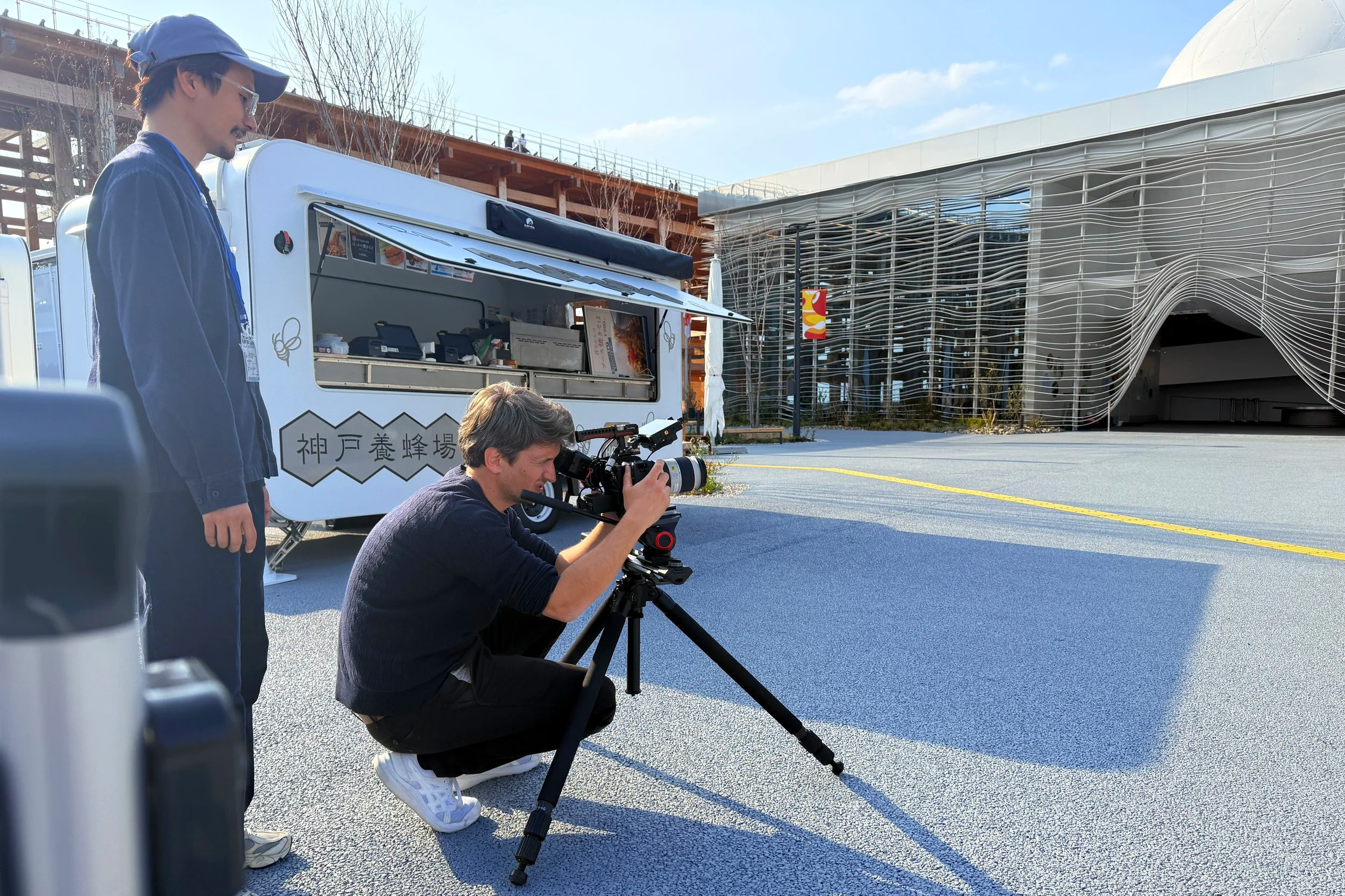
Expo 2025 Osaka became a large part of my work throughout 2025, leading to several photography and filmmaking commissions for different clients and 4 pavilions across the site.
Being able to work inside the Expo before its public opening was such unique experience. Spending more than a week immersed in this massive international event provided a rare opportunity to witness the final stages of construction, installation, and preparation before visitors would eventually walk through the gates.
Those projects also offered an opportunity to work on a larger scale than many of my previous assignments, managing several commissions simultaneously while balancing different creative visions, production schedules, and client expectations.
/ Pre-Production and Planning /
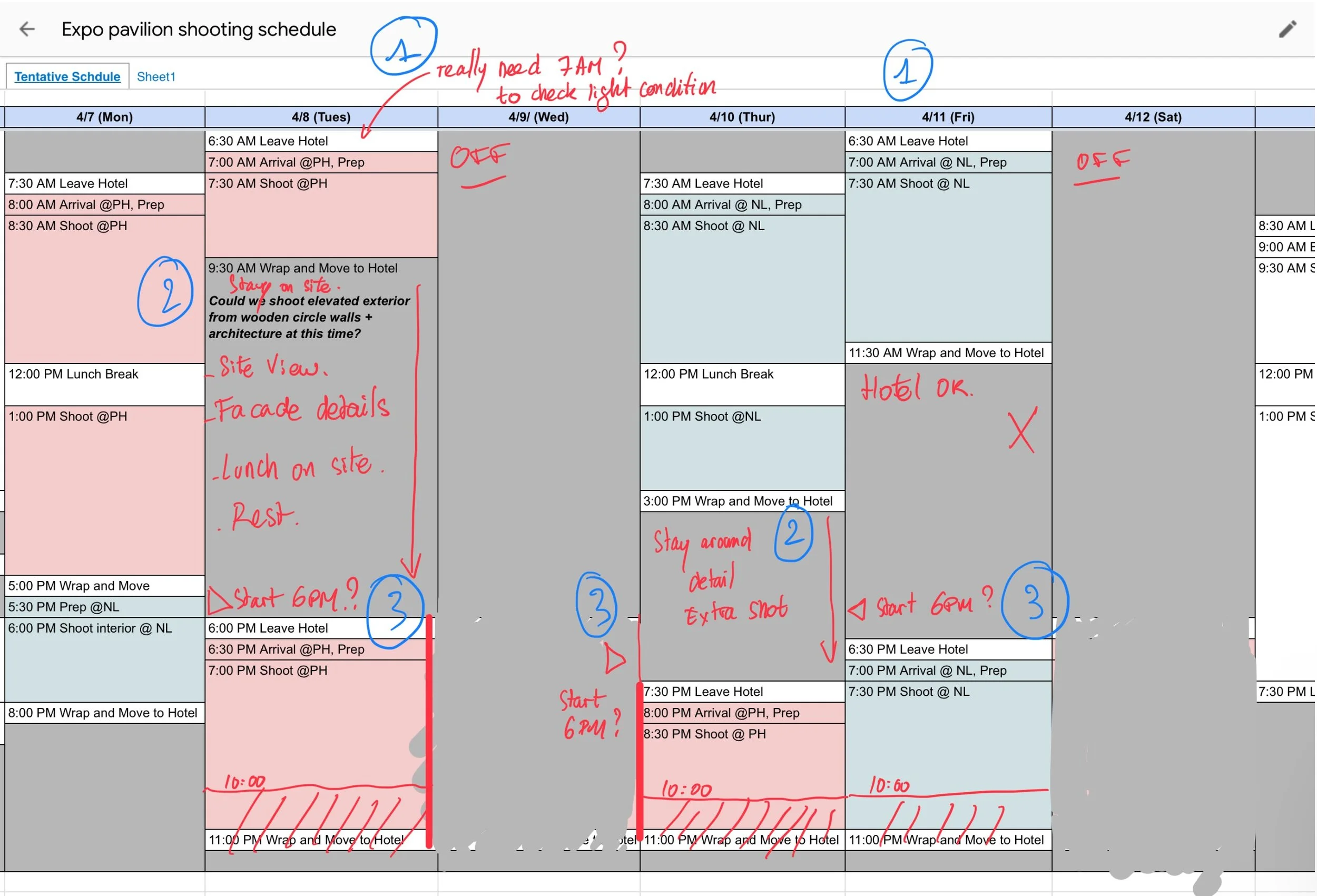
As with most of my projects, a significant portion of the work happened long before arriving on site.
For each commission, I worked closely with clients to understand their objectives, expectations, and desired outcomes. Through a series of discussions and interviews, we defined the overall direction of each film and photography project, identifying the key stories, spaces, and experiences that needed to be captured.
Based on these conversations, I developed storyboards, shooting structures, and production plans to establish a clear visual direction for each project. These preparations allowed the entire team to approach the shooting days with a shared understanding of the final goals.
For the first time in my career, I also collaborated with a dedicated video producer. His role was instrumental in coordinating access to the Expo site, managing communication with pavilion teams, and organizing casting and logistics for several scenes involving actors and extras.
Working with performers added an entirely new dimension to the production process. From casting and scheduling to wardrobe selection and on-site coordination, it was a fascinating opportunity to explore a larger-scale production workflow than I typically encounter on architectural projects.
Alongside these film commissions, I was also entrusted with architectural photography assignments and a documentary-style video project involving interviews, architectural documentation, and narrative storytelling. Together, these projects offered a comprehensive view of the many ways architecture can be communicated through visual media.
/ The Netherlands and Philippines Pavilions: Large-Scale Film Production /
The largest assignment consisted of two films documenting the Netherlands and Philippines Pavilions for Tellart, an Amsterdam-based experience design studio specializing in immersive exhibitions, interactive installations, and visitor experiences. Tellart was responsible for much of the scenography, digital content, and visitor experience design within both pavilions.
The production was spread across five shooting days and represented the most ambitious project of my time at the Expo.
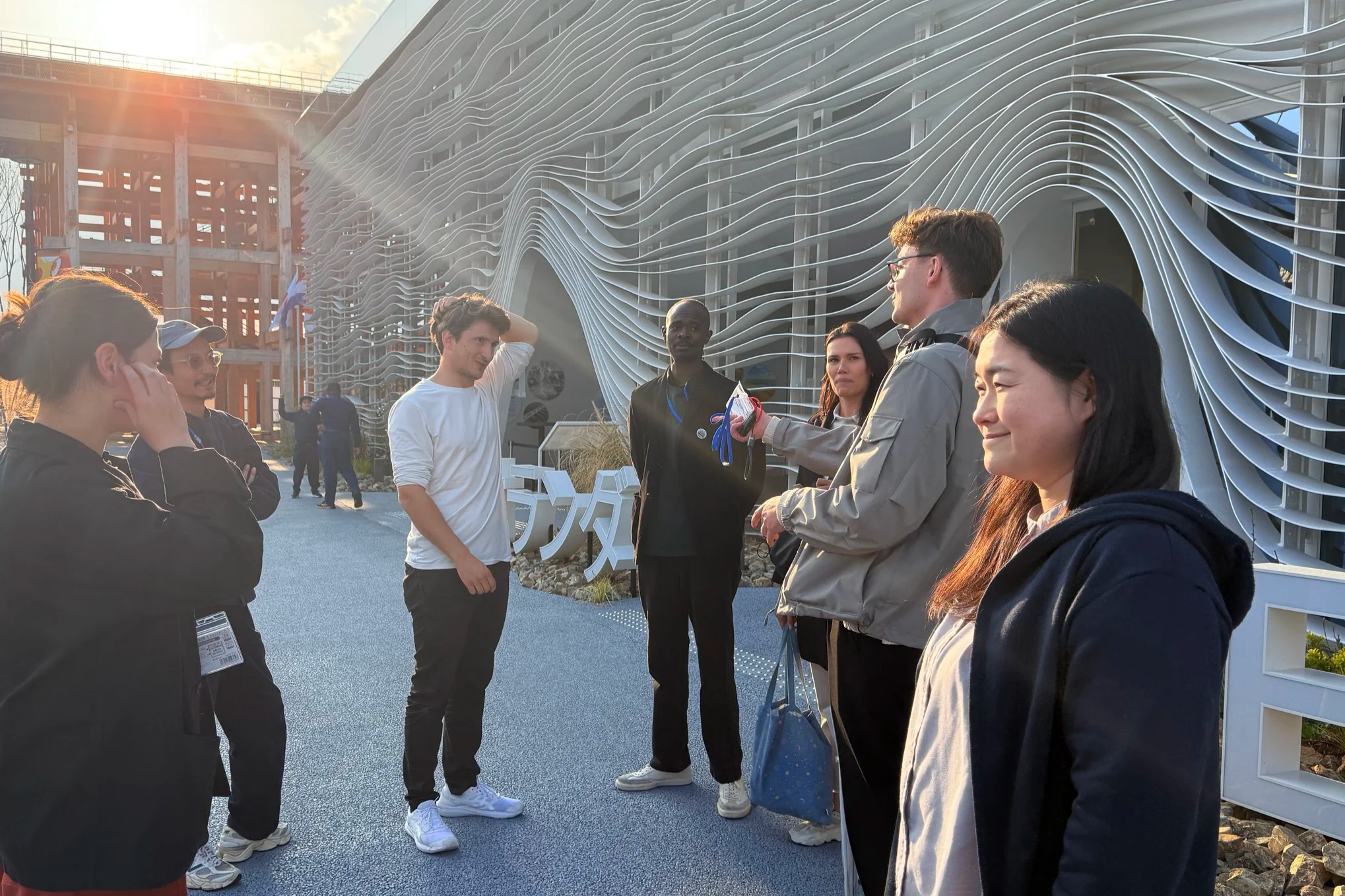
One of the most valuable moments occurred during the initial site visits and location scouting sessions. Walking through both pavilions with the Tellart team allowed us to discuss not only the architectural spaces themselves but also the visitor journeys, interactive installations, and emotional moments we wanted to capture on film.
Because the Expo was still approaching its opening period, the atmosphere was particularly dynamic. Final adjustments were being made everywhere, teams were completing installations, and there was a palpable sense of anticipation throughout the site.
The shooting days themselves introduced new challenges. For the first time, I was directing multiple groups of extras and performers, guiding them through scenes while ensuring they felt comfortable in front of the camera. This involved everything from wardrobe decisions to directing movement and interaction within the spaces.
Scheduling required constant flexibility. Pavilion operations, VIP visits, security procedures, and evolving site conditions often required adjustments throughout the day. Fortunately, working alongside an experienced producer proved invaluable. He handled all logistics and coordination, allowing me to focus entirely on the creative and visual aspects.
The collaboration was smooth, professional, and genuinely enjoyable. Thanks to the combined efforts of everyone involved, we successfully produced two films that captured both the architecture and the unique experiences these pavilions were designed to offer.
Following the shoot, I completed the editing and post-production myself, delivering the final films on a relatively tight schedule. The clients were particularly pleased with having a single point of contact capable of overseeing the entire process—from planning and shooting through to final delivery.
/ Photographing the Luxembourg Pavilion /
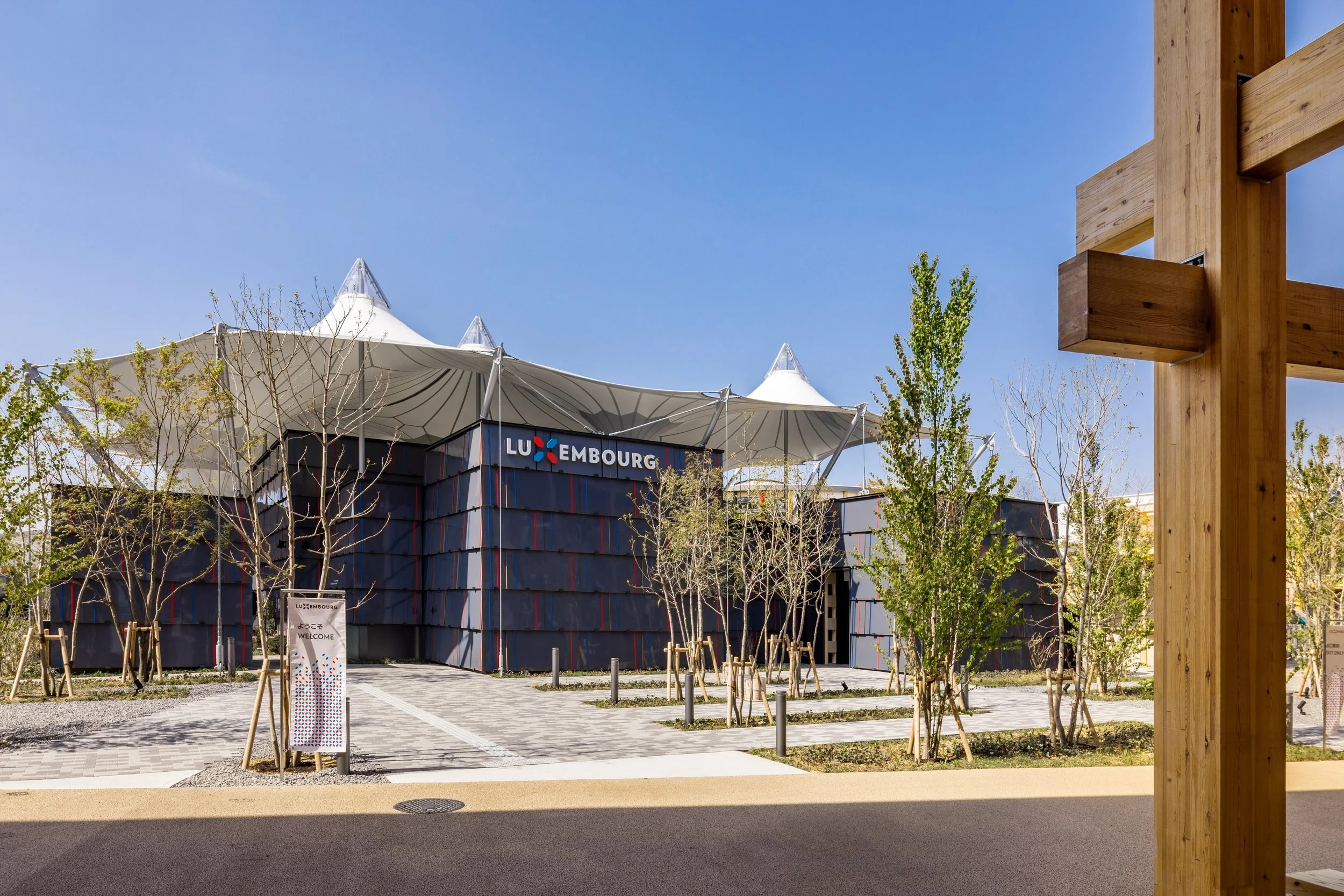
The second project focused on architectural photography for the Luxembourg Pavilion.
This assignment was commissioned through Mikan, the local architectural office supporting the European design team responsible for the pavilion’s development.
Compared to the larger film productions, this project was relatively straightforward, allowing me to focus entirely on photography. Nevertheless, it offered a completely different perspective on the Expo experience.
The pavilion itself was smaller in scale but highly engaging, featuring a carefully designed visitor journey, immersive projections, and a thoughtful interior environment. Spending time documenting the project allowed me to appreciate many of the details that visitors often overlook during a typical visit.
The photography process followed a familiar workflow, capturing the building under different lighting conditions and documenting both the architectural design and visitor experience. Once the shoot was completed, I quickly edited and delivered the images, providing the team with a visual archive that could be used for future publications, presentations, and communications.
It was rewarding to contribute to preserving a record of a project that represented years of design and collaboration.
/ The Poland Pavilion Documentary Film /
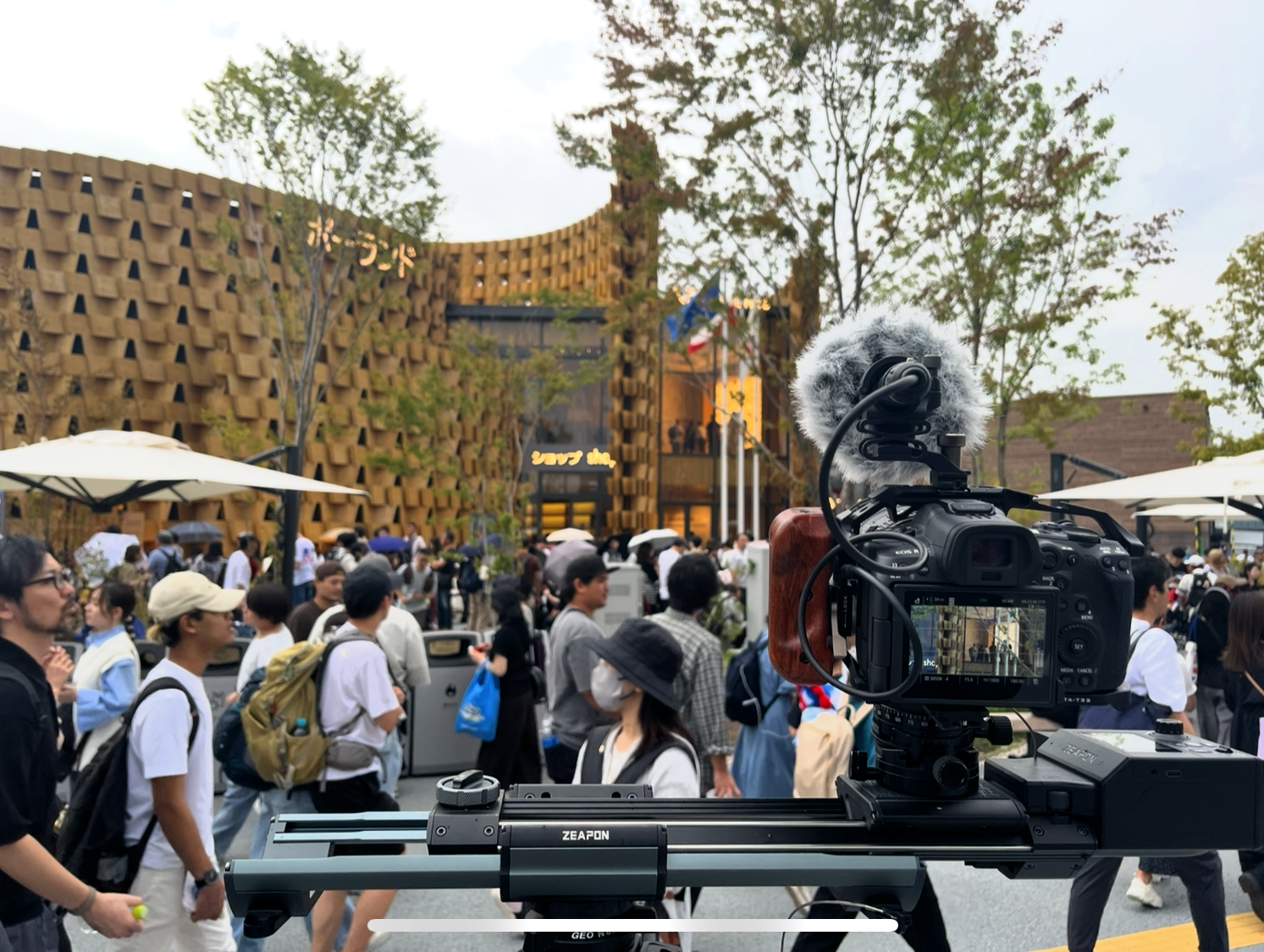
Several months later, as Expo 2025 Osaka approached its final weeks, I returned to the site for another commission, this time documenting the Poland Pavilion.
The video was commissioned by the lead design team at Interplay Architects, together with the local architectural team responsible for its realization in Japan.
Unlike the previous productions, this film was built around interviews. The objective was to capture the perspectives of the design team while also including feedback from the client, creating a broader narrative about the project’s impact and public reception.
This was particularly relevant because the pavilion had become one of the most appreciated architectural projects at the Expo, attracting attention for its distinctive design and visitor experience.
To prepare, I arrived a day early to conduct location scouting and capture evening footage of the pavilion. This additional time allowed me to identify suitable interview locations and plan camera setups before the main shooting day.
The weather was not ideal, with overcast skies and occasional rain, but fortunately it never became a major obstacle.
The interviews were filmed early in the morning, taking advantage of quieter conditions before visitor numbers increased. We conducted conversations both on the terrace and within the exhibition spaces, capturing a variety of perspectives and visual backgrounds that helped tell the story of the project.
After completing the morning interviews, I spent the remainder of the day capturing additional footage of the pavilion, the exhibition spaces, visitors, and the surrounding Expo environment. As is often the case in architectural filmmaking, gathering material at different times of the day allowed me to create greater visual variety and better support the narrative structure during the editing process.
Beyond documenting the architecture itself, I was particularly interested in showing how visitors interacted with the pavilion and how the project functioned within the larger context of the Expo. These observational moments often become some of the most valuable elements during editing, helping transform a simple documentation film into a more engaging story.
The post-production process progressed smoothly. Within approximately one week, I delivered the first edit, which then became the basis for ongoing discussions with the architects. Together, we refined the narrative, selecting the most relevant interview excerpts, adjusting the balance between architecture and commentary, and identifying the aspects of the project they most wanted to highlight. This collaborative approach ultimately resulted in a film that reflected both the design intentions and the overall success of the pavilion throughout the Expo.
Project Page
/ Conclusion /
What I will remember most is the opportunity to repeatedly return to the same place while working on completely different assignments. Each project required a different way of seeing and communicating architecture, whether through photography, documentary interviews, or larger-scale productions involving actors and dedicated production teams.
The experience was demanding, with nearly nine days of shooting spread across several commissions, but it was also incredibly rewarding. Working across different project scales, client expectations, and production methods kept every assignment fresh and engaging.
I am particularly grateful to the clients who entrusted me with a significant degree of creative freedom. Their confidence allowed me to approach each project through my own architectural perspective while adapting to their specific communication goals.
Beyond the creative aspects, the Expo also provided an opportunity to strengthen my ability to manage larger productions, coordinate multiple stakeholders, and oversee projects from initial discussions through final delivery.
Few events bring together architecture, design, technology, and culture on such a scale. Having the opportunity to document part of that story while living and working in Japan was a privilege, and one of the most memorable professional experiences of my year.