Working back with SFA
/ Introduction /
I recently completed two architectural films commissioned by the Utzon Center in Denmark as part of an exhibition dedicated to the work of Sou Fujimoto.
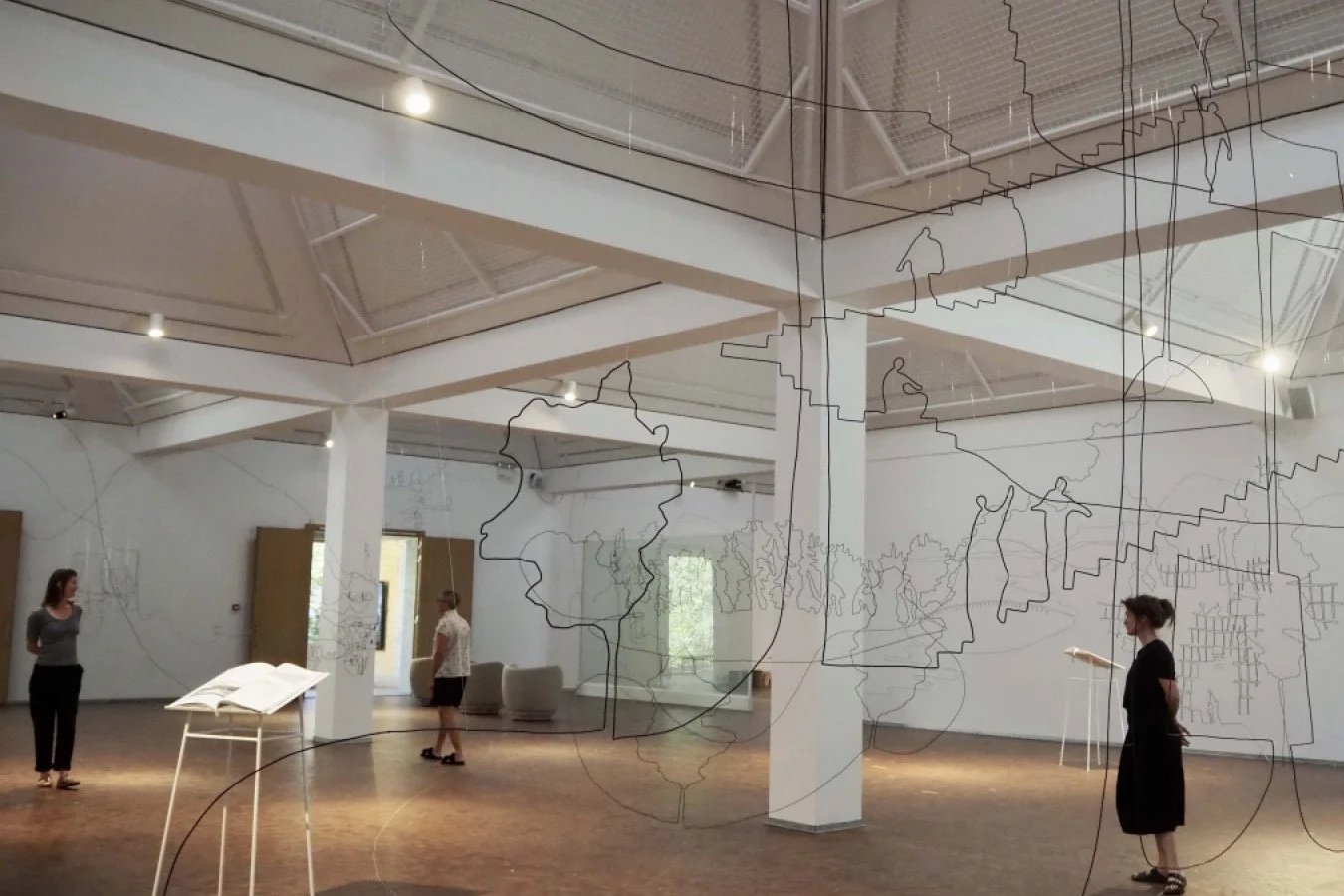
The exhibition presents a series of Fujimoto’s delicate wireframe models and drawings suspended throughout the gallery space, offering visitors an immersive introduction to his architectural thinking. As part of the exhibition, the curatorial team commissioned a set of architectural films to accompany the physical models and provide a more direct experience of several built projects.
Having previously documented a number of Fujimoto’s works, I was invited to produce new films of two of his most significant projects: the Musashino Art University Library in Tokyo and the Shiroiya Hotel in Maebashi.
Unlike many architectural films created for online audiences, these videos were designed specifically for exhibition viewing. Displayed on a large-format screen measuring approximately three meters wide, the films run continuously on a loop, allowing visitors to engage with the architecture at their own pace. The objective was not to create fast-paced promotional content, but rather a slower and more contemplative experience focused on atmosphere, materiality, light, and space.
/ Developing the Approach /
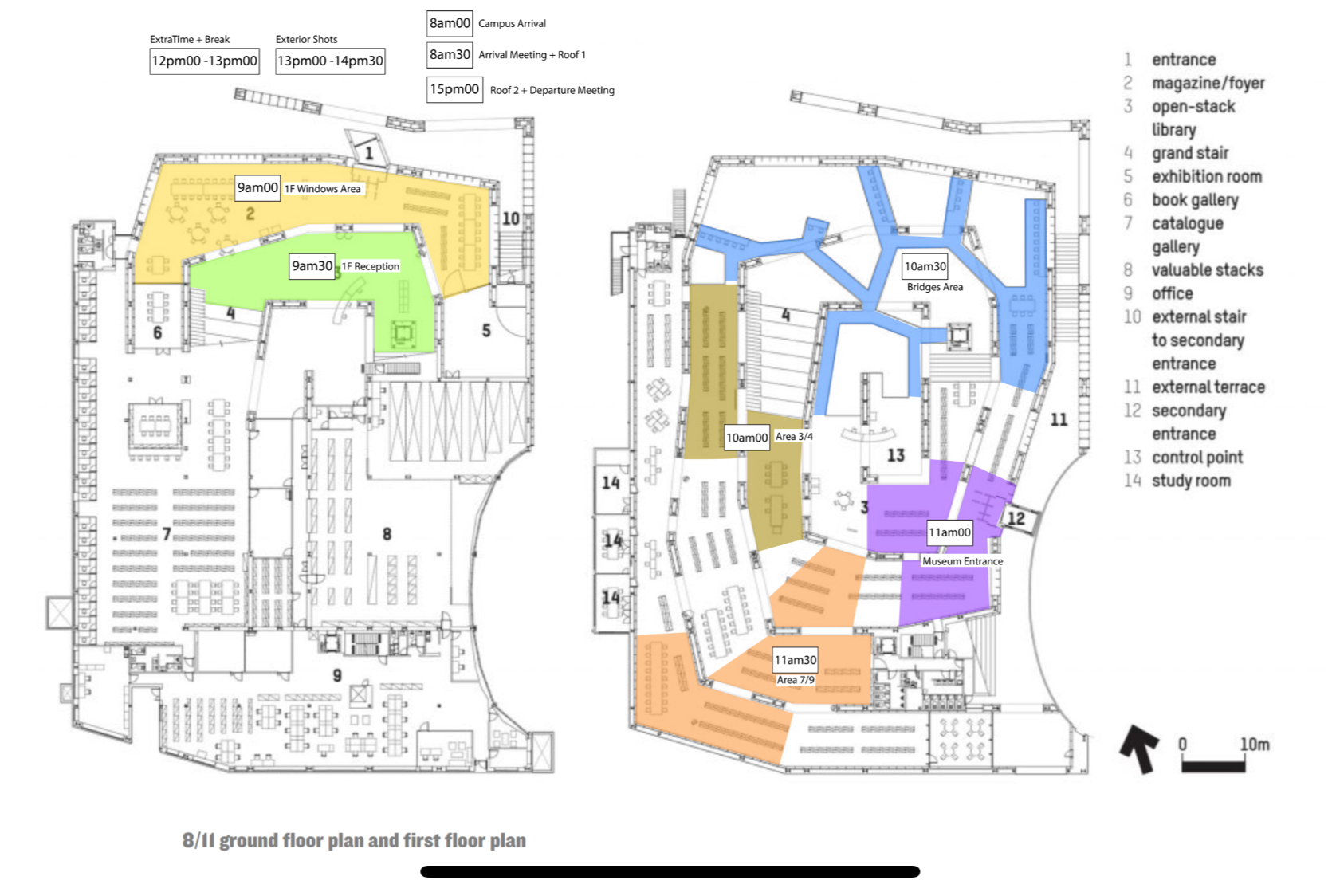
Following initial discussions with the curatorial team, I worked closely with representatives from Sou Fujimoto Architects to coordinate access to both projects.
A preliminary site visit was conducted at the Musashino Art University Library to review filming possibilities, discuss operational constraints, and establish a shooting strategy that would minimize disruption to students and staff. Detailed production schedules were prepared in advance to ensure that filming could be carried out efficiently while respecting the daily activities of each location.
Throughout the project, I was assisted by a longtime collaborator who helped with production logistics, equipment management, and on-site coordination.
/ Musashino Art University Library /
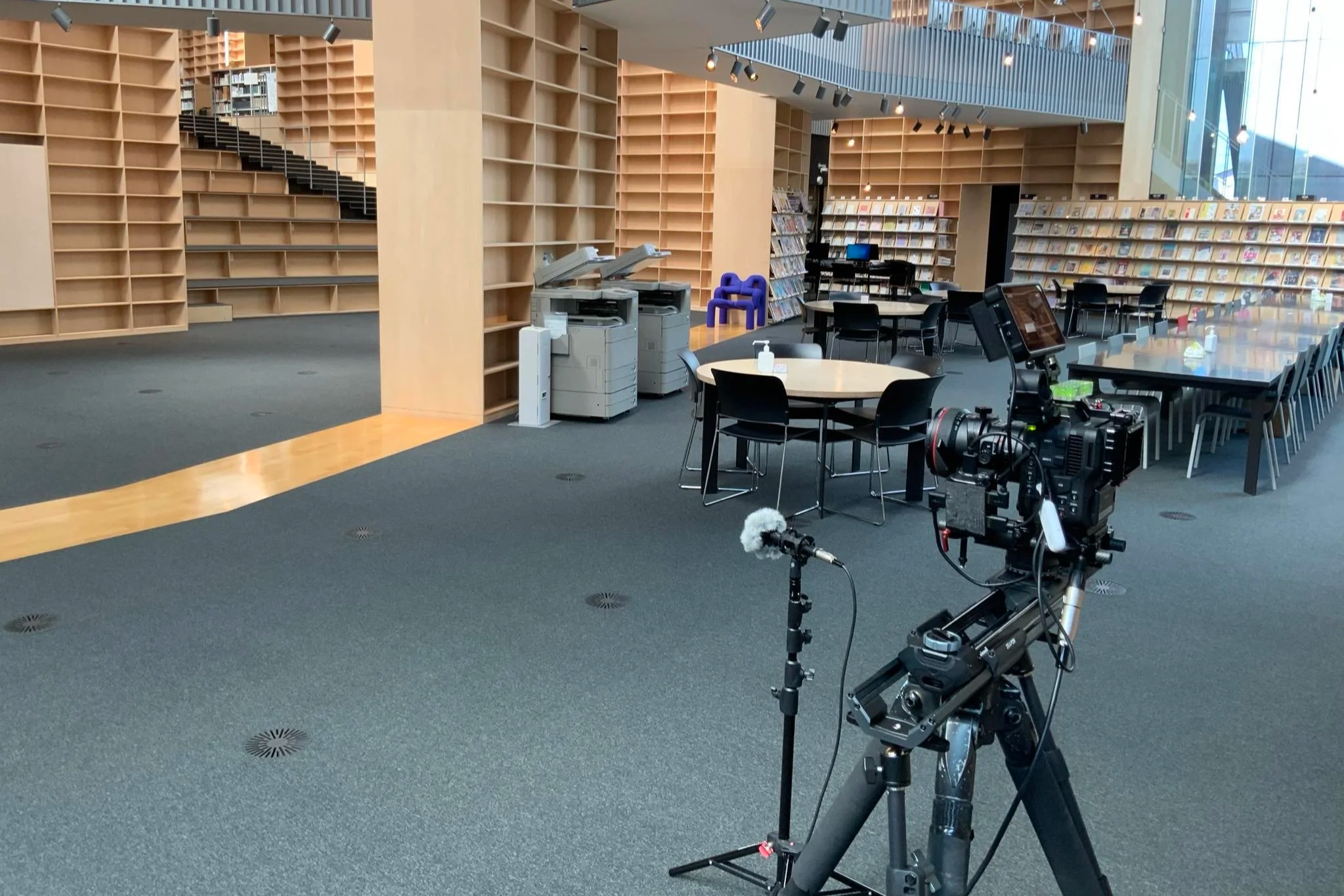
Filmed over the course of a full spring day, the Musashino Art University Library remains one of Sou Fujimoto’s most iconic projects and was one of the buildings that originally inspired me to join his office early in my architectural career.
The concept is remarkably simple yet powerful: a continuous architectural landscape composed of bookshelves, structure, circulation, and space. Rather than separating these elements, the project merges them into a single spatial experience.
Because drone operations were not permitted, elevated viewpoints were obtained from surrounding buildings whenever possible to better reveal the relationship between the library and its context. Particular care was taken to avoid disrupting students, who continued using the building throughout the filming process.
The visual language relied on controlled camera movements, precise framing, and architectural lenses that preserved the geometry of the space while emphasizing its layered depth. Stereo ambient sound recordings were captured throughout the day and became a key component of the final film. Since the project was intended for exhibition display rather than online distribution, natural sound played a much more important role than music in establishing atmosphere and immersion.
/ Shiroiya Hotel /
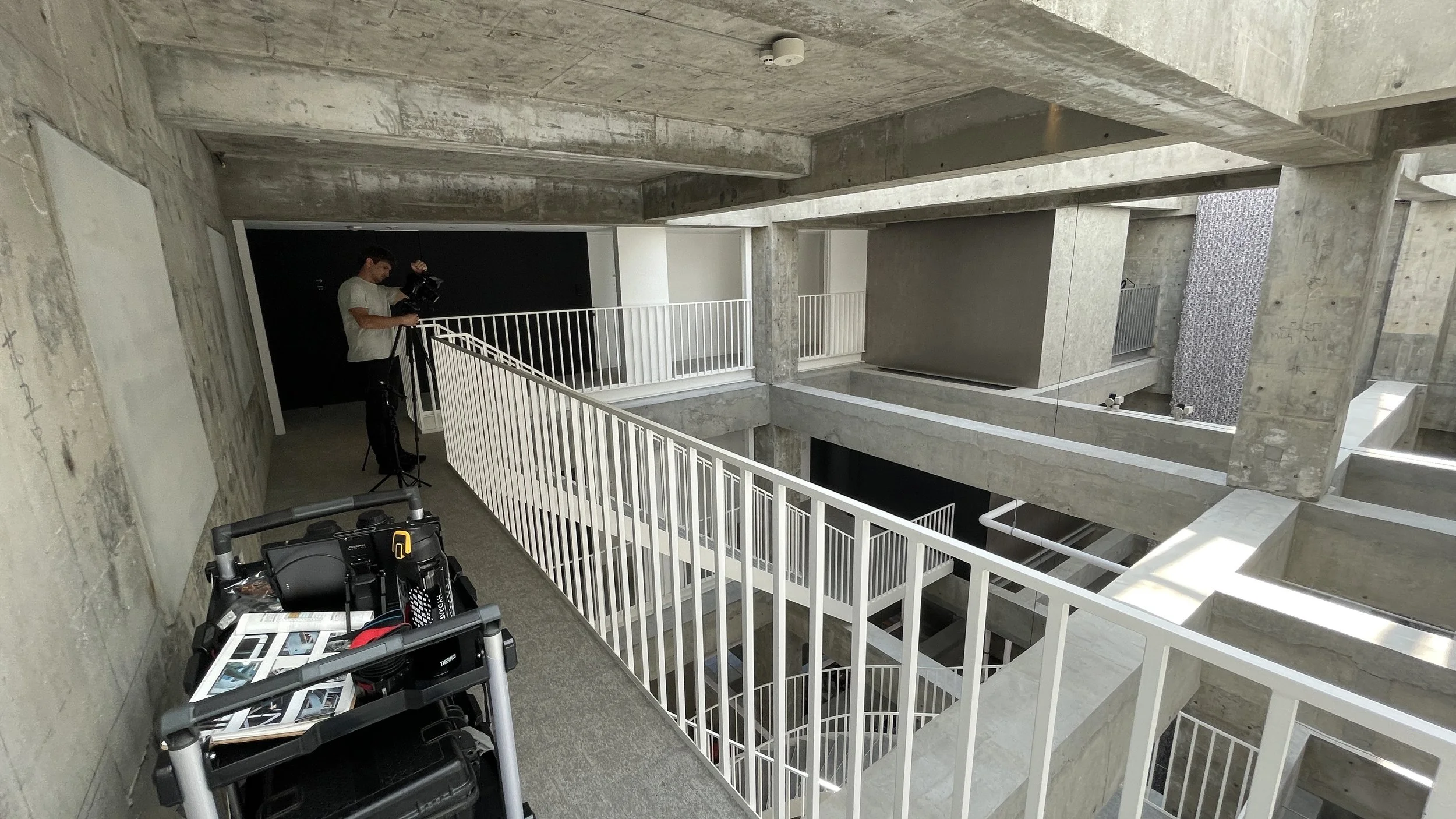
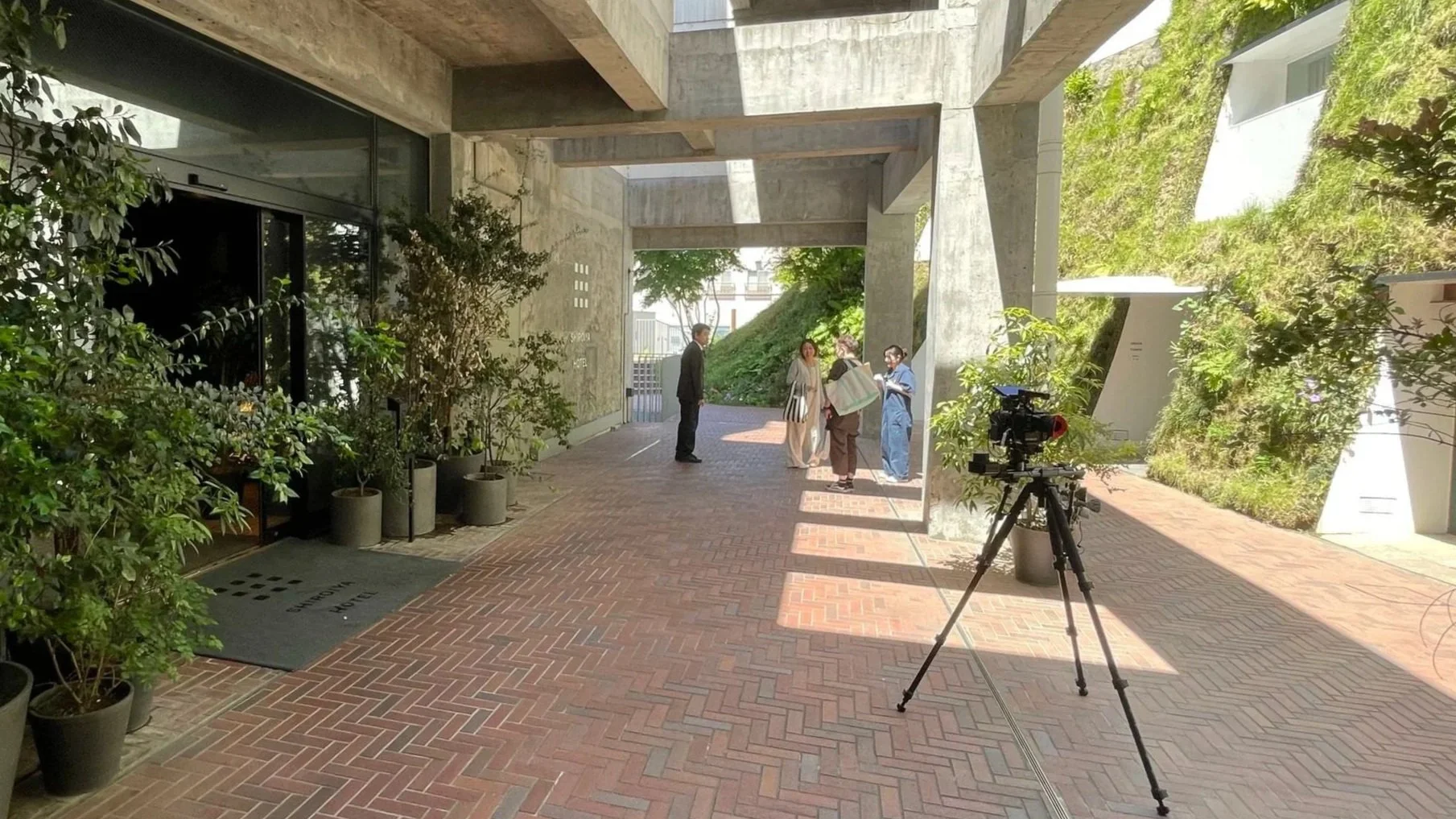
The filming of Shiroiya Hotel was carried out over two half-days with an overnight stay in Maebashi.
One of the primary objectives was to capture the building during the early morning hours, when sunlight reaches the east-facing façade. Access to a nearby rooftop provided valuable views of the project within the city and helped establish its urban presence.
The hotel team was extremely supportive and provided broad access to the building, including common spaces before opening hours. This flexibility made it possible to work efficiently while maintaining a calm environment for guests and staff.
What interests me most about Shiroiya Hotel is its transformation of an existing building. While Sou Fujimoto is often associated with new construction, this project demonstrates a different side of his work. The original interior was almost entirely reimagined, creating a dramatic sequence of interconnected spaces organized around floating staircases and new circulation routes. The intervention is both bold and surprisingly elegant, making it one of the most compelling renovation projects in his portfolio.
We were also able to document several upper-level spaces and one of the guest rooms designed by the architect, adding further depth to the final film.
/ Post-Production and Exhibition /
Both films were delivered in 4K and edited specifically for large-scale exhibition display. Running at approximately four minutes each, they were designed to function both as standalone pieces and as part of a larger continuous exhibition loop.
Because the films would be projected at a significant scale, particular attention was paid to image stability, composition, and visual precision. The editing remained intentionally restrained, allowing visitors to focus on the architecture itself rather than on the filmmaking.
Reflections
The exhibition has now opened, and it has been particularly satisfying to see the films integrated alongside Sou Fujimoto’s models and drawings. Exhibition projects create opportunities for a different kind of architectural storytelling—one that values observation, atmosphere, and duration over speed and spectacle.
On a personal level, the commission also provided an opportunity to reconnect with an architect whose work has had a significant influence on my own career. Before becoming a photographer and filmmaker, I spent the first years of my professional life working at Sou Fujimoto Architects. Returning to document these projects from a different perspective felt both familiar and rewarding, and I am grateful to have contributed to an exhibition celebrating work that continues to inspire me.