/ Introduction /
Following our collaborations on One Fukuoka Building and Roppongi Hills in Japan, KPF contacted me again to film their Dongdaegu Transportation Hub in Daegu, South Korea. This was our first production together outside Japan, and I was pleased to continue supporting their team in a new setting.
The brief combined architectural cinematography with interviews filmed throughout the project. The architects would move through the building, discussing its urban context, construction, principal design concepts, and the relationships with clients and partners that helped bring it to life.
My role covered production coordination and the complete filming process, from architectural footage to the interview sequences. As with our previous collaborations, KPF’s internal team would handle the editing and final delivery for their YouTube channel.
Preparing the shoot involved coordinating travel, accommodation, equipment, and the schedules of my assistant and the architects on site. Working internationally also introduced an additional responsibility: arranging the temporary export and import of our filming equipment.
/ Production & ATA Carnet /
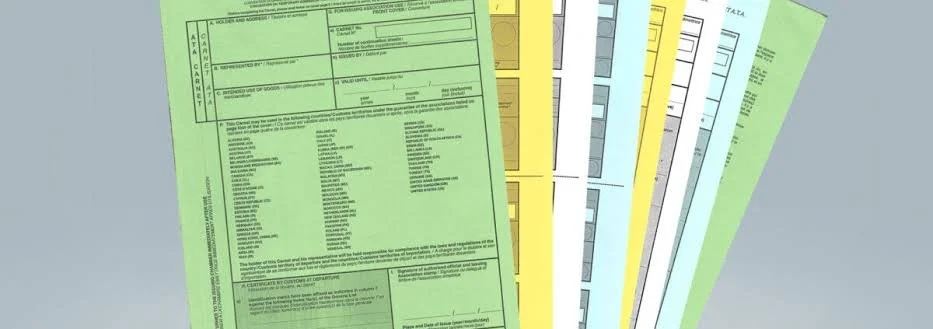
For this production, I managed the ATA Carnet process from beginning to end for the first time.
An ATA Carnet can be understood as a passport for professional equipment. It facilitates temporary movement across borders, allowing eligible equipment to be imported without paying import duties and taxes, provided the relevant conditions are met and the equipment is subsequently re-exported.
With several cameras, five or six lenses, sound equipment, and other production accessories, a compact filming package can still represent a considerable investment. Preparing the appropriate documentation was therefore an important part of organizing the shoot.
I completed the application in Japan through the JCAA, allowing approximately five to six working days for the process in this instance. The preparation involved compiling an equipment inventory and arranging the documentation needed for customs at each stage: departure from Japan, arrival in South Korea, departure from South Korea, and return to Japan.
All four stages went smoothly. Having the equipment documented under the carnet made the journey easier to manage and allowed us to work with our own equipment on location.
This administrative work also needs to be reflected in the production budget. Beyond the cost of issuing the carnet, preparing the inventory and completing customs procedures require time. It is a manageable part of an international production, but one that needs to be planned alongside flights, accommodation, and filming schedules.
/ Shooting Days /
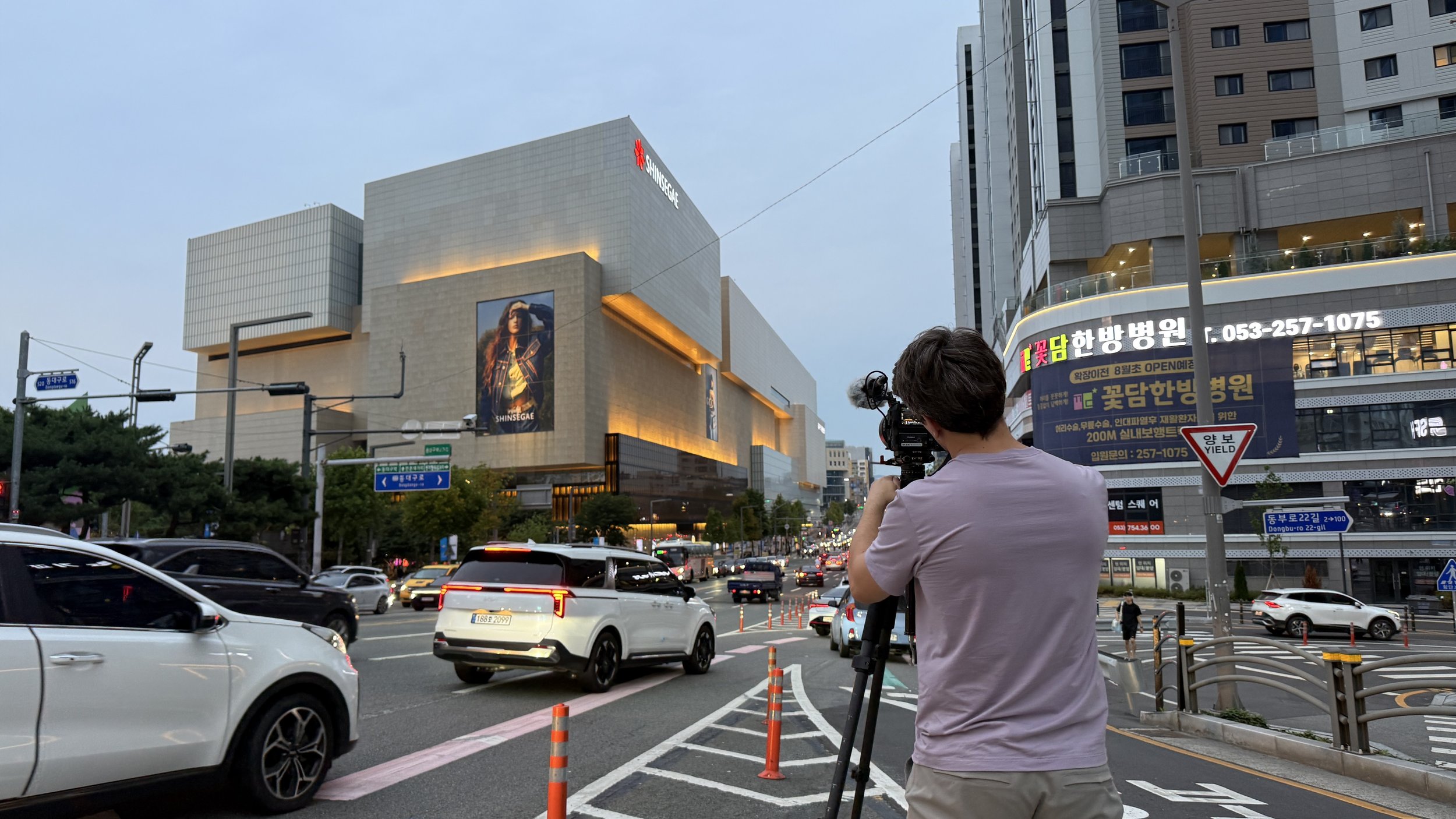
We arrived the day before the main shoot to familiarize ourselves with the building and begin capturing night footage. The main production was planned over two days, combining time with the architects and dedicated architectural filming.
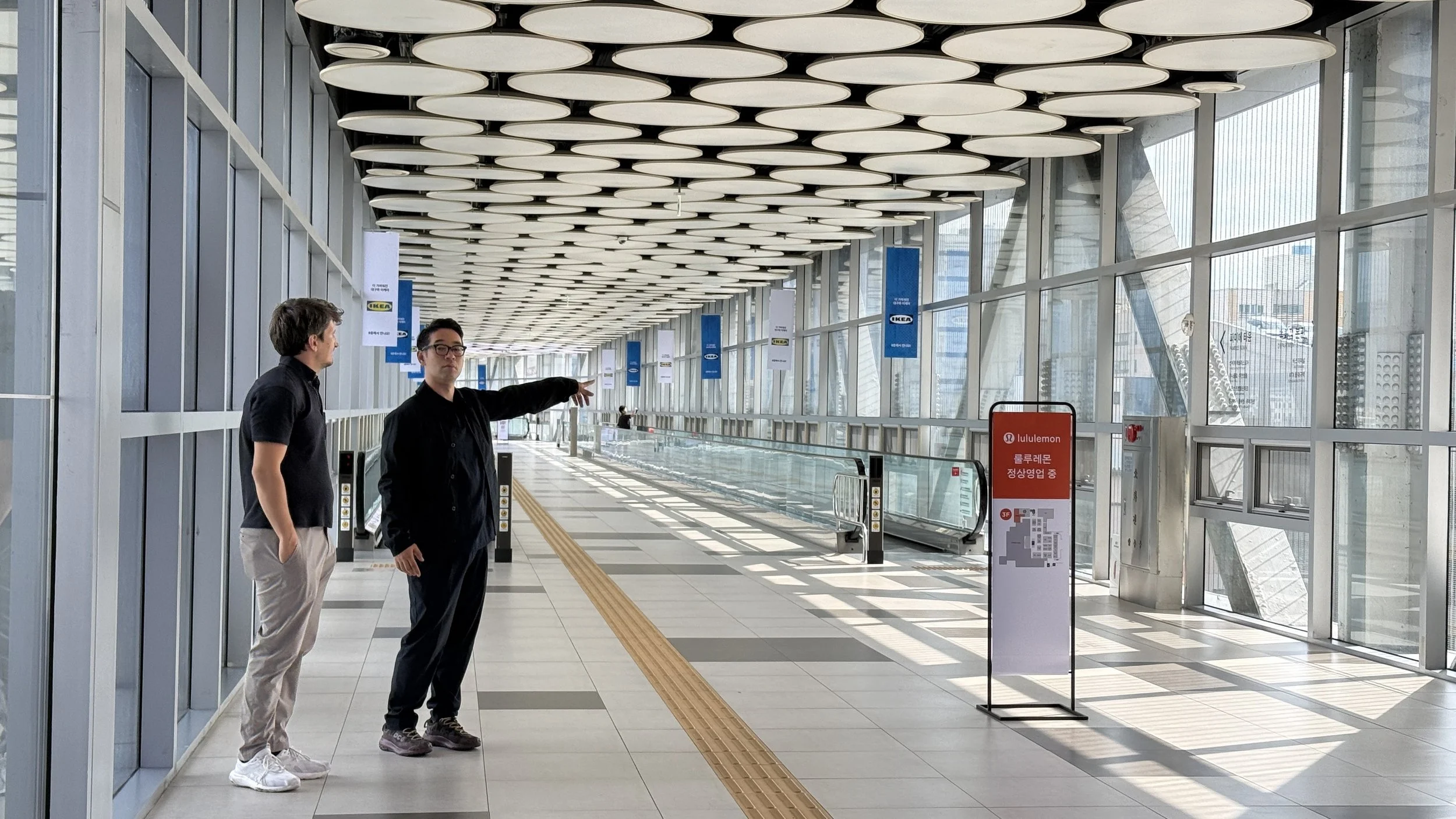
Half a day was reserved for the interviews. We recorded five to six sequences in different parts of the building, with each location providing a setting for a particular aspect of the discussion. Moving through the project allowed the architects to connect their explanations directly to the spaces around them.
These conversations explored the project from several perspectives, including its relationship with the city, the development of the design, construction challenges, and collaboration between the different parties involved.
The following day was dedicated to architectural footage, from morning through evening. We focused on exterior facades, wider views, and the surrounding city, gathering the images needed to support the interviews and establish the project’s context.
The scale of the building was one of the most distinctive challenges of the shoot. It was the most extensive building I had worked on, and moving between filming locations required careful planning. Camera positions, interview locations, and changing daylight all had to be considered together, with enough time allowed for traveling through the complex.
/ Equipment & Workflow /
We kept the crew deliberately small: my assistant and myself. This allowed us to move efficiently through the building and adapt to busy public spaces.
For the interviews, we both operated cameras on stabilized rigs, following the architects as they walked through the project. This two-camera setup allowed us to capture complementary angles while giving the architects the freedom to move naturally and refer directly to the spaces around them.
These walk-and-talk interviews brought a sense of movement to the conversations. We could explore the architecture alongside its designers, connecting their explanations to the experience of moving through the building. The spaces became an active part of the discussion, with the architects able to point out details and explain relationships as they came into view.
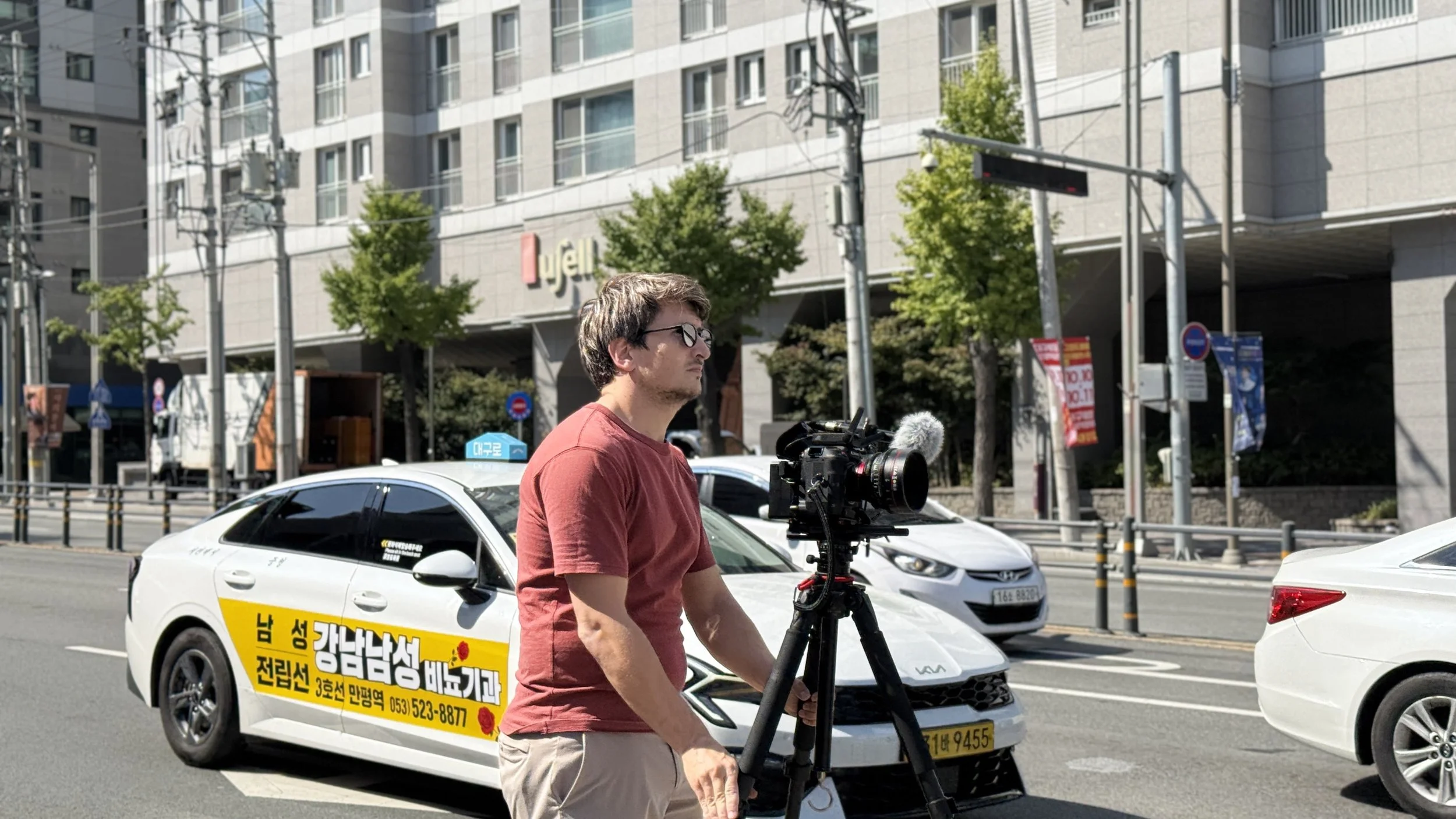
For the architectural sequences, we switched to a compact setup built around a camera, tripod, and a bag of lenses. I used specialist architectural lenses, paying close attention to perspective, composition, and the relationships between spaces. The aim was to maintain the precision and visual quality of my usual work while adapting to an active public environment.
Working across these two approaches required careful scheduling. The interviews depended on the architects’ availability and our route through the building, while the architectural footage required attention to light, framing, and activity within each space. Planning both together helped us maintain a consistent visual approach while making efficient use of our time on site.
/ Collaboration & Delivery /
After the shoot, I prepared the footage for KPF’s internal production team, selecting the main takes and carrying out color correction before transferring the files.
My responsibility covered production, cinematography, and the preparation of the images. KPF’s team would then develop the edit and complete the film in line with the formats and editorial approach of their YouTube channel.
Continuing this working relationship made the division of responsibilities familiar. I could focus on capturing the architecture and interviews, while keeping in mind the range of material their editor would need to build the story.
It was also rewarding to spend time with the architects on site. Hearing them discuss the project while moving through it gave us a direct connection between their ideas, the completed building, and the images we were producing.
/ Conclusion /
This project marked a new stage in my collaboration with KPF and in the development of my architectural filmmaking work across Asia.
The production ran smoothly, including the transport of our equipment and the customs procedures that were new to me. Managing these elements alongside the filming gave me greater confidence in organizing future international shoots from my base in Tokyo.
The experience also provided a practical foundation for productions involving slightly larger teams of three or four people, combining architectural cinematography, interviews, and location production according to the needs of each project.
I was pleased to discover more of South Korea, meet the architects working there, and continue a collaboration that began with our films in Japan. I am grateful to KPF for their renewed trust and look forward to further opportunities to document their work across the region.